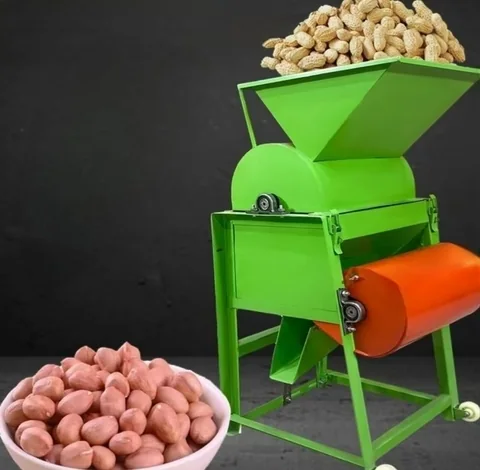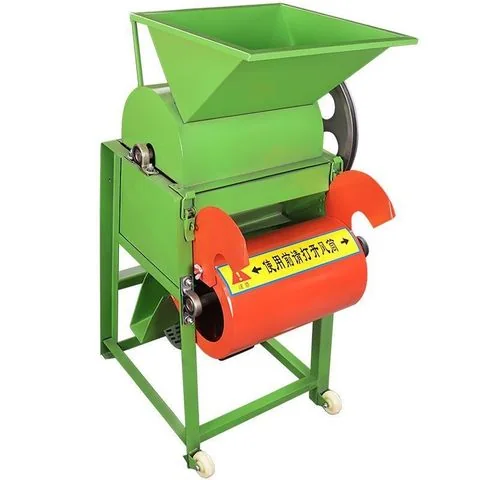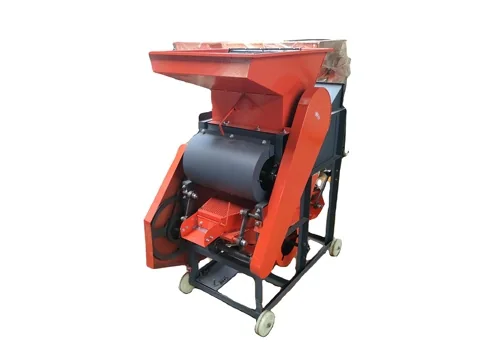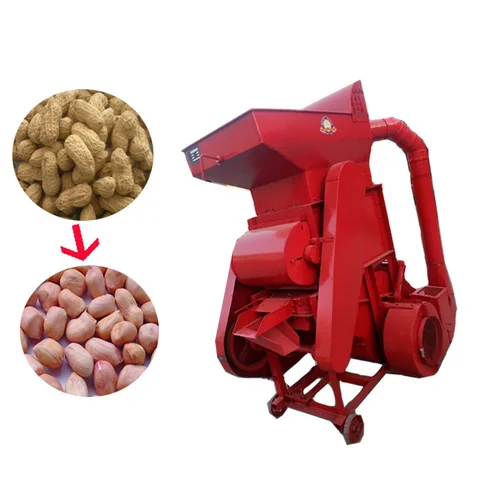
A shelling machine is bought to close the gap between hand shelling and the volume a buyer needs to move. In our published range that job is covered by four groundnut hullers priced from US$290 to US$866 per set, and the price steps between them do not track brand or finish. They track throughput, kernel breakage, and whether the kernels leave for a press or for a seed bag.
Four models, four duty classes
_caption: Shelling machine price bands, published range, November 2026_
| Duty class | Rated throughput | Model | Published price | Typical buyer |
|---|---|---|---|---|
| Household shelling | not published | Portable Electric Peanut Huller | US$295-315 | Household and smallholding |
| Farm scale | 200 kg/h | Peanut Sheller with Sieve | US$290-299 | Farm preparing kernels for market |
| Commercial | 800 kg/h | Peanut Hulling Machine | US$599-630 | Aggregation point buying from smallholders |
| Seed grade | 800-1100 kg/h | Groundnut Seed Sheller, Low Breakage | US$833-866 | Seed companies and cooperatives |
Two things in that table surprise buyers.
The cheapest unit is not the smallest. The 200 kg/h sheller with a sieve starts at US$290 and its published range tops out at US$299, while the portable household huller is published at US$295-315. The two ranges overlap between US$295 and US$299, and the sited machine never costs more than the portable one. If your only criterion is price, the portable unit is the wrong end of the range.
The top of the range is not simply more capacity. Moving from 800 kg/h to the seed sheller costs another US$234-236, and almost none of that is throughput: it is kernel quality.
What each price step actually buys
- Portable to 200 kg/h. Sieve separation and a rated throughput. The price moves by a few dollars, but the machine stops being something you carry and becomes something you site next to a store.
- 200 to 800 kg/h. Continuous duty. The published price roughly doubles, from US$290-299 to US$599-630, because the machine is built to run all day rather than in batches.
- 800 kg/h to the seed sheller. Not throughput but breakage. The groundnut seed sheller is specified for low breakage and high kernel purity, for output that will be planted rather than crushed.
Throughput in tonnes, not kilograms
_caption: Rated throughput converted to a working day and month (arithmetic on the published rating, at 8 hours per day and 25 days per month)_
| Model | Rated throughput | Per 8-hour day | Per 25-day month | Price per tonne of daily capacity |
|---|---|---|---|---|
| Peanut Sheller with Sieve | 200 kg/h | 1.6 t | 40 t | US$181 |
| Peanut Hulling Machine | 800 kg/h | 6.4 t | 160 t | US$94 |
| Groundnut Seed Sheller | 800-1100 kg/h | 6.4-8.8 t | 160-220 t | US$95 |
These are multiplications of the rated throughput, not measured output. Real throughput moves with kernel moisture, how dry the crop was when it was bagged, who is feeding the machine, and how often the screens are changed.
Seed grade is a different purchase
If the kernels are going into the ground next season, breakage is the number that matters, not tonnes per hour. A cracked kernel does not germinate, so the machine is bought to protect a planting programme rather than to clear a warehouse. That is the buyer the groundnut seed sheller is published for: seed companies and cooperatives preparing planting seed.
If the kernels are going to an oil press or to a market stall, the 800 kg/h huller is the cheaper route per tonne, and the extra spend on the seed-grade machine buys nothing you can use.
What this range does not cover
Maize shelling is a different machine class and it is not in our published list. If you are shelling maize, tell us and we will say so rather than substitute a groundnut huller for the job. The four models above cover groundnut and peanut hulling only.
Four questions that decide the model
- How many tonnes per day must be shelled? Use the arithmetic table above, then add margin for the days the machine stops.
- Where do the kernels go — press, seed, or market? A seed programme justifies the seed sheller; a press does not.
- What power is at the site? Voltage and phase are confirmed per order against your actual supply, because the same model is shipped to sites on different grids. Send a photograph of the supply and the rating, and the motor is specified against it.
- Who runs it, and how often can screens be changed? A sieve machine rewards an operator who keeps it clean. If nobody will, buy the simpler unit.
Before you pay
- Ask for the sieve or screen set with the machine, and a spare. It is the part that wears.
- Confirm the motor against your voltage and phase, in writing, before the order is placed.
- Confirm how the machine is packed for sea freight, and what the packing list covers.
- Ask what test and inspection records are issued with the order documents.
- Confirm the port and the Incoterm, because the published price is per set and freight is quoted separately.
Where to see every published price
Every model in this article carries its price on its own page, and the full list is collected in one place: 31 of the 32 machines we publish have a figure, and the rest are quoted per order. If you want the current figure for a specific unit, ask with your country and destination port and we will confirm price per set, shipping method and lead time in one reply.