Feed pellets and chopped forage get searched for together because the same farm buys both. A poultry or livestock operation needs pellets it can mix itself, and it needs a way to reduce hay, straw or silage to a length the animals will eat. The two product families sit in the same purchasing decision.
What a ranking list never gives you is the band each machine sits in. Ours are published in full, which makes the comparison possible before anyone asks for a quotation.
All eight models, by published throughput and price
| Model | Family | Published throughput / power | Published price (per set) |
|---|---|---|---|
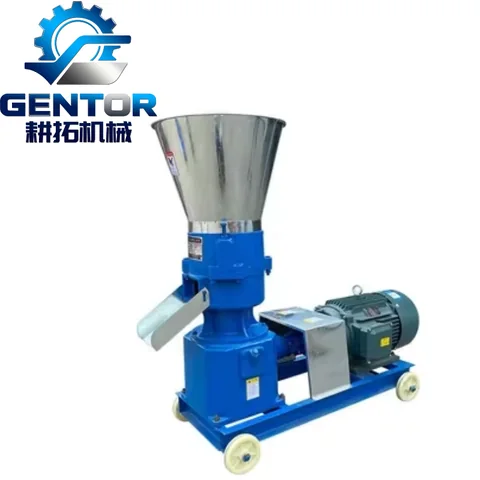
| Ring Die Feed Pellet Mill, 200 kg/h | Feed pellet | 200 kg/h, ring die | US$275-288 |
| Mobile Electric Feed Pellet Machine, 120-150 kg/h | Feed pellet | 120-150 kg/h, wheel-mounted | US$280 |
| Flat Die Feed Pellet Machine, 220 V 3 kW | Feed pellet | 220 V, 3 kW, flat die | US$299-319 |
| Mini Feed Pellet Press, 100 kg/h | Feed pellet | 100 kg/h | US$300-319 |
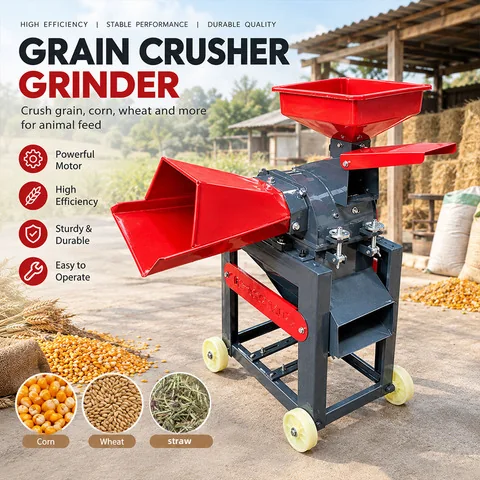
| Electric Chaff Cutter, 3 kW | Chaff cutter | 3 kW, hay, straw, grass | US$280-299 |
| PTO Driven Chopper with Diesel Engine | Chaff cutter | PTO or diesel, silage and green forage | US$320 |
| Feed Hammer Mill and Forage Chopper, 4 kW | Chaff cutter | 4 kW, grain grinding and forage chopping | US$330-355 |
| Multipurpose Silage Chopper, 300-1200 kg/h | Chaff cutter | 300-1200 kg/h, ultra-fine grinding | US$344-355 |
Read the two families as different jobs rather than as alternatives. The pellet models turn ground material into pellets; the chaff cutters and forage choppers reduce long material. Where a farm feeds silage as well as pellets, it buys from both columns.
Flat die and ring die, decided from the published role
Buyers often ask which die type is better. Our own published data separates them by role rather than by a quality claim: the flat die models are listed for named animals — cattle, sheep, pig and chicken — while the ring die model is published as the pelletising unit in a feed production line. Choose by the role you are filling, then check the throughput against your daily feed volume.
What to have in writing before the prices can be compared
Four things, on every quotation: throughput or capacity, the power requirement, the MOQ, and what the price includes. Then confirm two site conditions — the electrical supply and where the machine will stand. A 3 kW or 4 kW machine needs a supply and wiring that carry it, and that work is often the second largest line in the project after the machine itself.
If you tell us the animals you are feeding, the volume you mix per day and your destination port, we will point you at the model in each family that matches — and say so if the model you had in mind is oversized for the feed you can actually produce.