
Feed production

How to Make Chicken Feed Pellets

By the Gentor Machinery sales team · updated 2026-10-14

Pelleting turns a loose feed mixture into a form chickens cannot selectively eat around, which is why pellet feeding usually cuts waste. The process is short, but the order of operations and the moisture content decide whether the pellets hold together or crumble.

The five-step process

  1. Grind every ingredient to a similar particle size. Whole grain does not bind; very fine powder blocks the die.
  2. Mix the ground ingredients thoroughly and evenly before any moisture is added.
  3. Bring the mixture to the right moisture. Too dry and the pellet crumbles, too wet and the die slips and the pellets smear.
  4. Pelletise, feeding the die at a steady rate rather than in surges.
  5. Cool and dry the fresh pellets before storage, then bag them. Warm pellets sweat in the bag and mould follows.
What each step is controlling
StepWhat you are controllingSymptom when it is wrong
GrindingParticle size consistencyBlocked die, or pellets that break in the bag
MixingIngredient distributionBirds picking out one ingredient, uneven intake
MoistureBinding and die frictionCrumbling pellets, or smeared and soggy output
PelletisingThroughput and die wearOverheating, low output, short die life
Cooling and dryingShelf lifeMould, caking and rejected bags

Machine list for a small pellet line

  • A hammer mill to grind grain and, in the 4 kW version, to chop forage in the same machine.
  • A mixer sized to one batch, so mixing and pelletising are not fighting for the same operator.
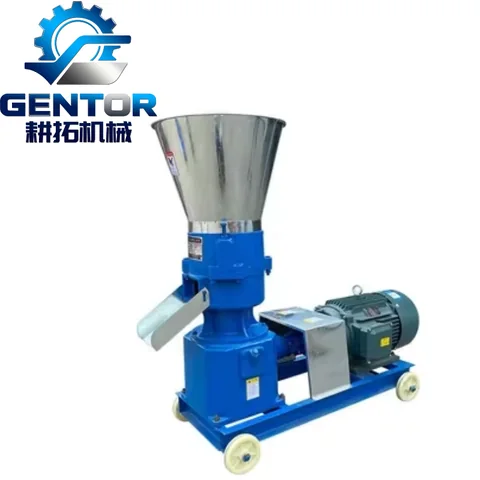
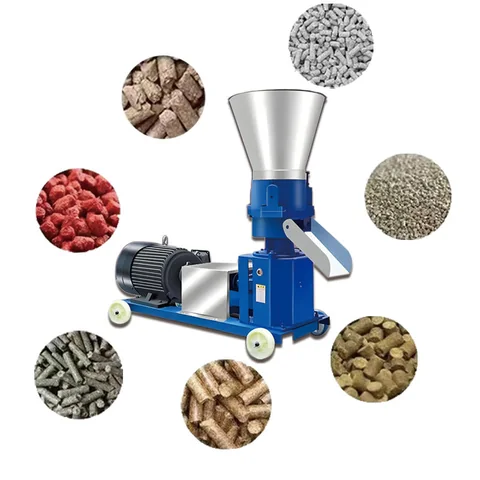
  • A pellet machine: flat die for short daily batches and single-phase power, ring die for continuous production.
  • A cooling and drying area with airflow, sized for at least one day of output.
  • A scale and bags, because pellet quality is only half of what a customer judges.

Die choice in one paragraph

Flat-die machines are simpler, cheaper and well matched to short batches on a single farm, and the flat-die model in our range runs a 220 V 3 kW motor for sites with single-phase power. Ring-die mills handle longer continuous shifts and higher throughput, which is what a feed line needs when pelletising is the bottleneck.

Pellet diameter and the animals you feed

Pellet size is set by the die, not by the machine, so the die is the part to agree before ordering. Tell us which animals you feed and at what stage, and we will supply the matching die size and quote alternative dies separately.
Talk it through

Send us the numbers from this guide — volume, area, power supply — and we will match a model to them and quote it per set.

Questions

How to Make Chicken Feed Pellets: common questions

Short answers to what buyers ask most often about this topic. The same text is published as FAQ structured data for search engines.

Do I need a hammer mill as well as a pellet machine?

Usually yes. Pelleting works best on a consistently ground mix, so the grain has to be milled to a uniform particle size before it reaches the pellet press. Some machines are sold as combined mill-and-press units, which is convenient but ties the throughput of one step to the other.

What decides the quality of the finished pellet?

Grind consistency, moisture and how steadily the press is fed. Over-wet material produces soft pellets that crumble in the bag; a feed rate that swings produces pellets of different densities. The recipe tables in this guide list the settings to hold constant and the ones you adjust for your own ingredients.

How much feed do I need to make for a small poultry flock?

Measure how much feed the flock consumes in a week, then compare it with the published hourly capacity of the machine you are considering, multiplied by the hours you are willing to run. If the weekly requirement is a few hours of running, a small single-phase machine is usually enough; if it means running most days, look at a larger press before you buy.

Get a quotation

Send your numbers and we will size the machine

Volume or area, power supply and destination port are enough for us to recommend a model and quote it.

We use your details only to answer this enquiry. Replies usually arrive within about two hours (Replies typically within 2 hours during 09:00-21:00 China Standard Time (UTC+8)).