Start with volume, not with equipment
Before looking at machines, write down how much paddy passes through your hands in a normal month. A trader moving 10 tonnes a month needs a very different setup from a cooperative handling 200 tonnes in a single harvest. Every later decision, from machine size to power supply, follows from that one number.
The seven steps
- Count real paddy volume. Use last season's records or your supplier's delivery notes, not an optimistic estimate.
- Turn annual volume into a weekly peak. Paddy arrives in a short window, so size the machine for the peak week and accept idle capacity in the quiet months.
- Choose how far you will process. Husking alone produces brown rice. Adding whitening and polishing produces white rice the market pays more for, but needs both machines and more skilled operation.
- Check the site before buying. You need hard standing, drainage, dry grain storage and enough room for a truck to turn.
- Confirm the power supply. Measure the voltage actually delivered at the site, and tell the supplier the voltage, phase and frequency so the motor matches.
- Order the two-machine core first. A husker plus a whitener covers the whole process; a single combined unit is cheaper but harder to expand.
- Set aside a spares budget on day one. Rubber rollers, screens and belts wear, and a mill standing still is the most expensive equipment you own.
Capacity maths you can do on paper
Published throughput is an hourly figure. Multiply it by the hours you will genuinely run, not by the hours the building is open. An eight-hour day at 300 kg per hour is about 2.4 tonnes of throughput, so a month of 22 working days is roughly 52 tonnes. Compare that to your volume from step one.
| Machine | Published throughput | Per 8-hour day | Per 22-day month |
|---|---|---|---|
| Portable mini rice mill | Not published per hour | Depends on operator and paddy | Sized for household and village use |
| 2.2 kW vertical rice whitener | Whitening stage only | Finishes rice, does not husk | Add to an existing husking line |
| Paddy husker | 300 kg/h | About 2.4 t | About 52 t |
What the equipment list actually contains
- Husking: a paddy husker that separates husk from paddy and produces brown rice.
- Whitening and polishing: a vertical whitener that brings rice to a saleable white finish.
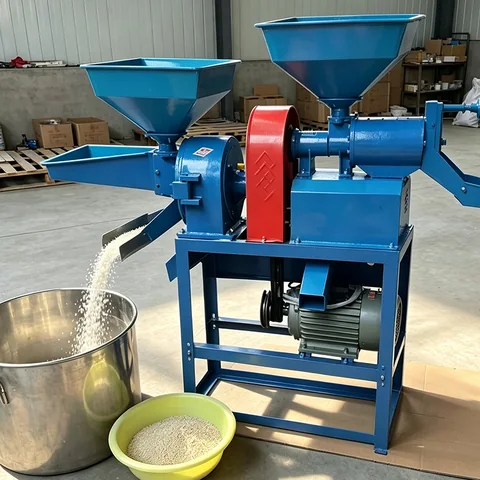
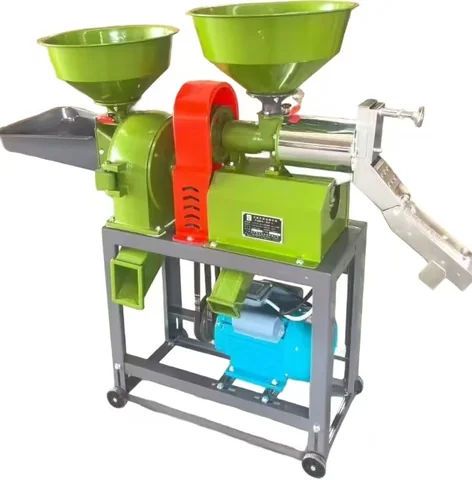
- Optional but useful: a combined mini mill that mills, peels and crushes in one unit for small volumes.
- Consumables: rubber rollers, screens, drive belts and a basic tool kit held on site.
- Weighing and bagging equipment, which is usually bought locally rather than imported.
The four mistakes that stall a new mill
- Buying for the best week instead of the peak week, then running the machine at a fraction of its rating for the rest of the year.
- Ignoring delivered voltage. A motor specified for one supply running on another overheats and fails early.
- Skipping storage. Milled rice reabsorbs moisture, and a wet store destroys the margin the mill was built to earn.
- Ordering no spares. A two-week wait for a rubber roller is two weeks of lost throughput and unsupplied customers.
Talk to us with three numbers ready
Send us your monthly paddy volume, the peak week volume, and your site voltage and phase. With those three numbers we can recommend a specific husker, whitener or combined mill, quote it per set, and confirm the shipping method to your port.